WHAT HAPPENED TO TWISTER?
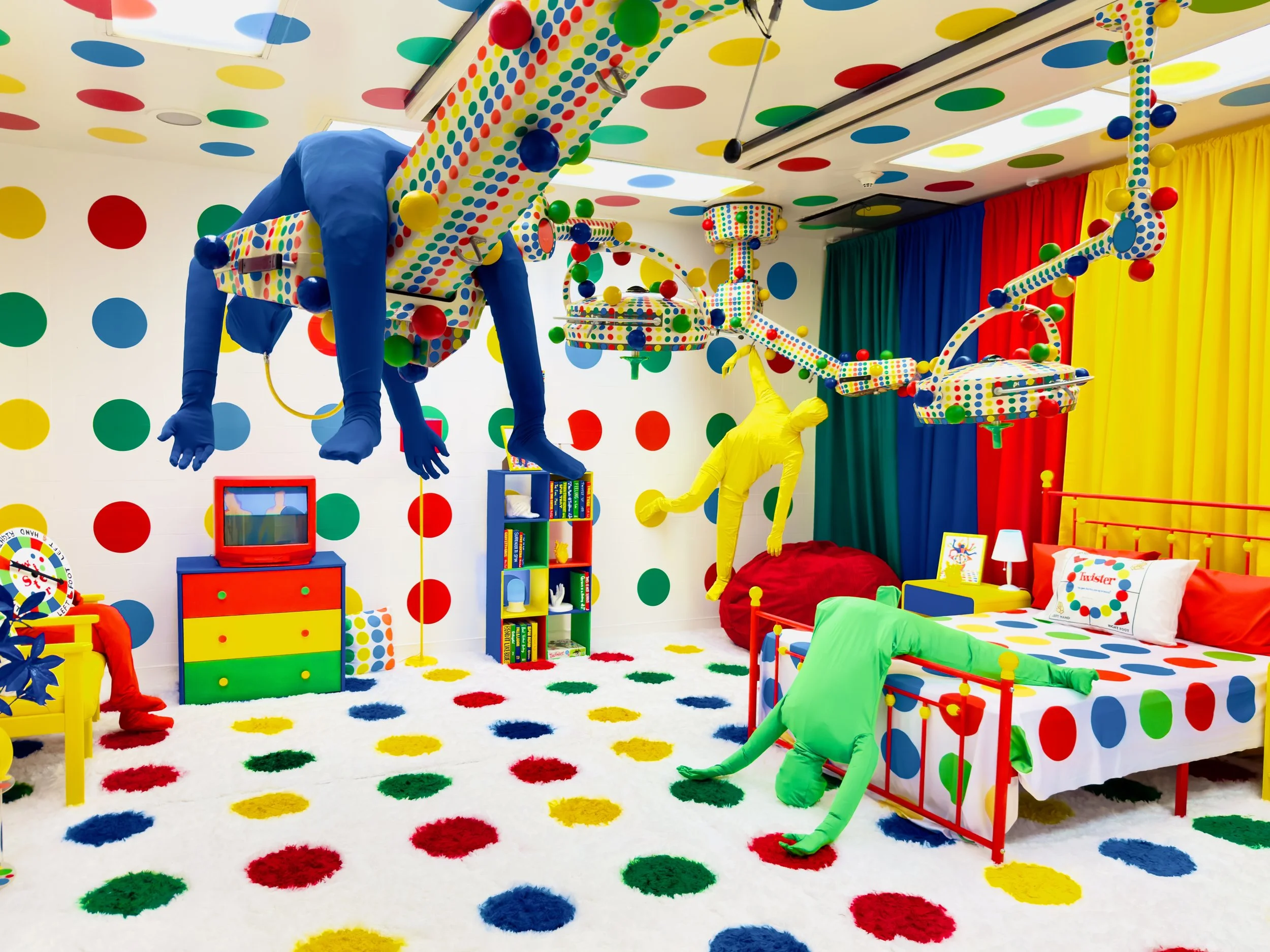
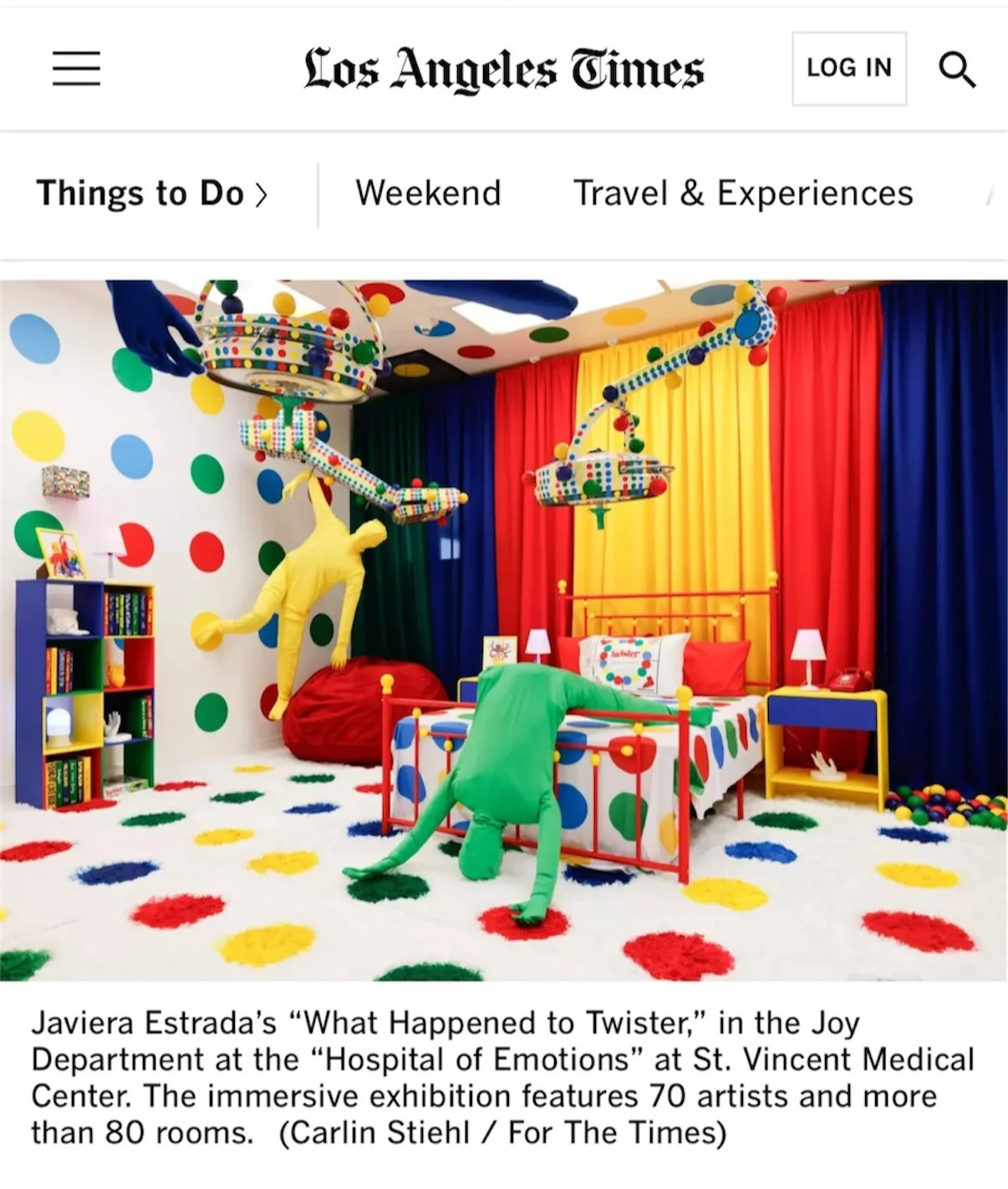
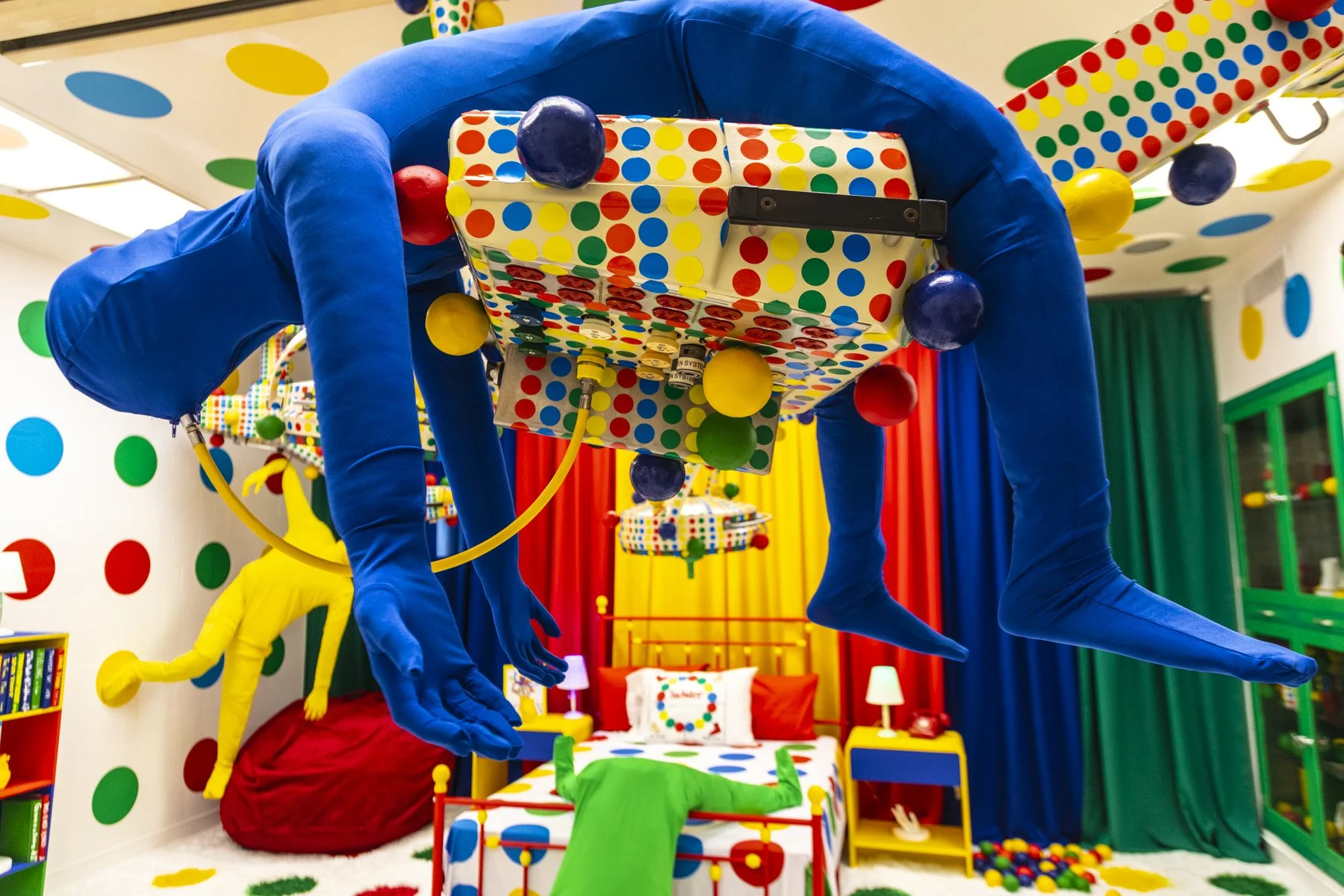
Installation on view at The Hospital of Emotions
Twister is a game many of us encountered in childhood - played on living room floors where bodies stretched across bright circles and laughter filled the room. Unlike many games today, it required players to be physically present with one another. The game demanded balance, cooperation, and the willingness to share space. It invited people to move together, lose their footing, and laugh at the awkwardness of it all.
In an era increasingly shaped by digital connection and distance, Twister recalls a form of play rooted in physical presence and human interaction. It reminds us of the simple pleasure of negotiating space with others in real time. Here, the familiar language of the game becomes a visual and spatial expression of joy.
Joy appears not as something private, but as something shared - generated through proximity, movement, and participation. Perhaps joy begins the moment we stop standing apart and start moving together. As laughter multiplies and bodies intertwine, joy spreads through the space itself.
What begins as a simple game becomes a reminder that joy often lives in the messy choreography of being human together.
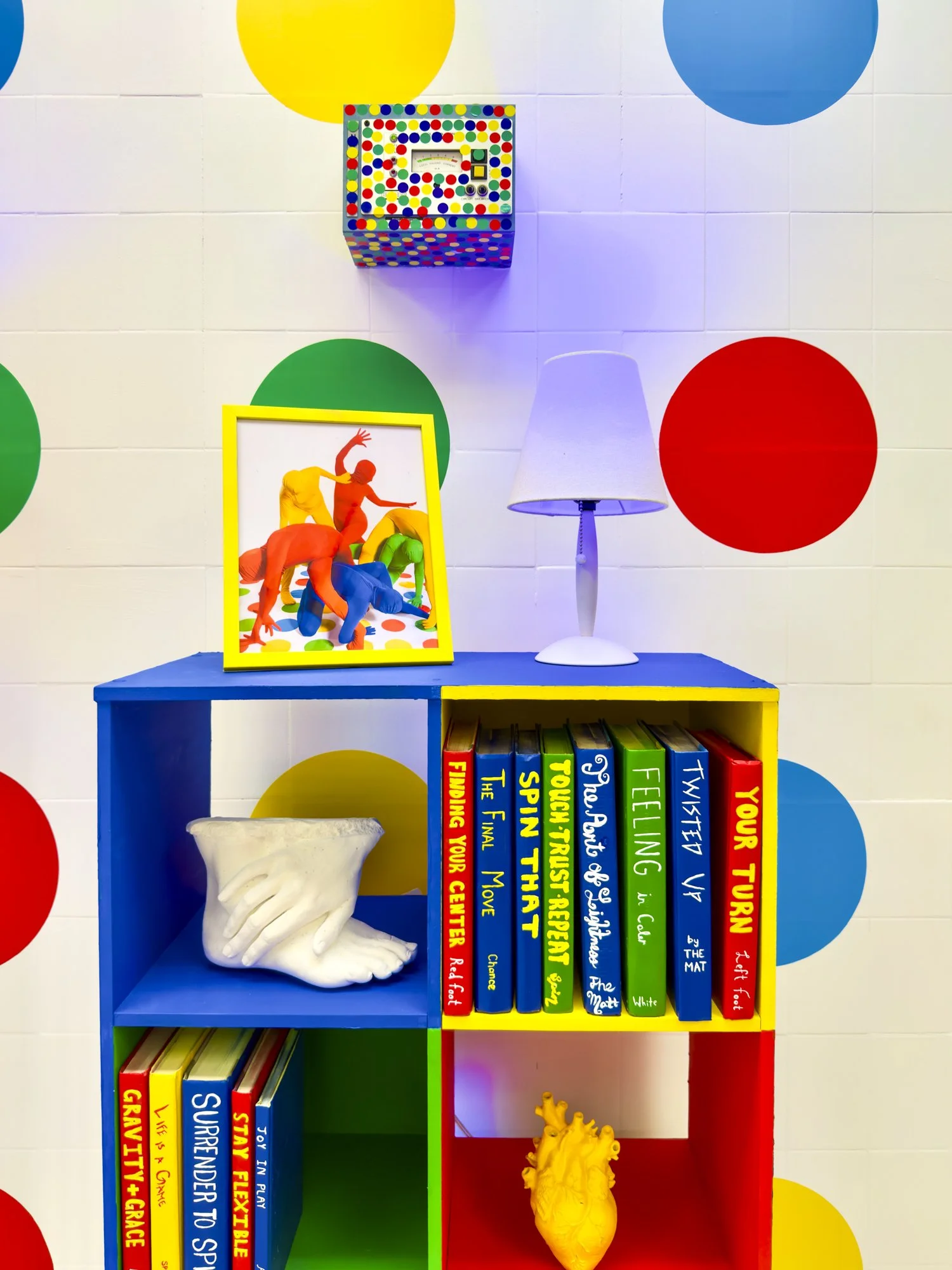
Once, we twisted ourselves into one another's lives.
We gathered in living rooms, on playgrounds, and around kitchen tables. We touched, laughed, competed, stumbled, and connected. Our bodies occupied the same space. Our attention belonged to each other.
Somewhere along the way, the rules changed.
The screens grew brighter. The rooms grew quieter. We became performers, spectators, profiles, and algorithms. We learned how to be visible everywhere while disappearing from the moment directly in front of us.
What Happened to Twister? is a playful act of remembrance. Through color, movement, touch, and collective participation, the film revisits the simple but profound experience of being physically present with one another.
Bodies stretch, collide, balance, and connect. Strangers become collaborators. Play becomes a form of communication. What begins as a game slowly transforms into a reflection on trust, vulnerability, cooperation, and the human need for connection.
The work asks a simple question:
What happens when we choose presence over performance?
By returning to the language of childhood play, the film invites viewers to reconsider what may have been lost in our increasingly mediated lives—not nostalgia for the past, but a renewed appreciation for the experiences that can only happen between people sharing the same space.
Perhaps the game was never Twister.
Perhaps the game was being human.
What Happened to Twister? The Human Game
LACMA X JEFFREY DEITCH ART PARADE
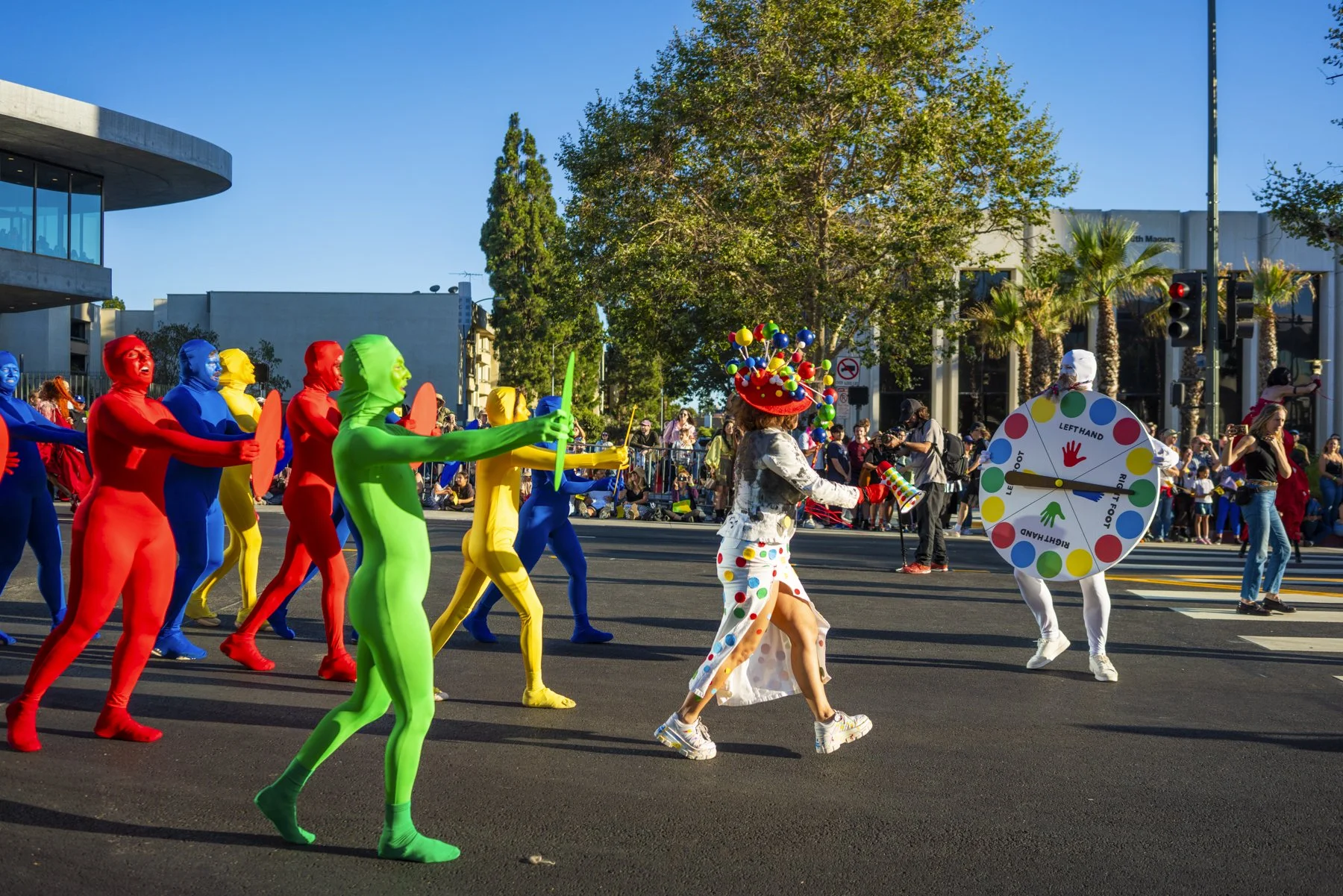
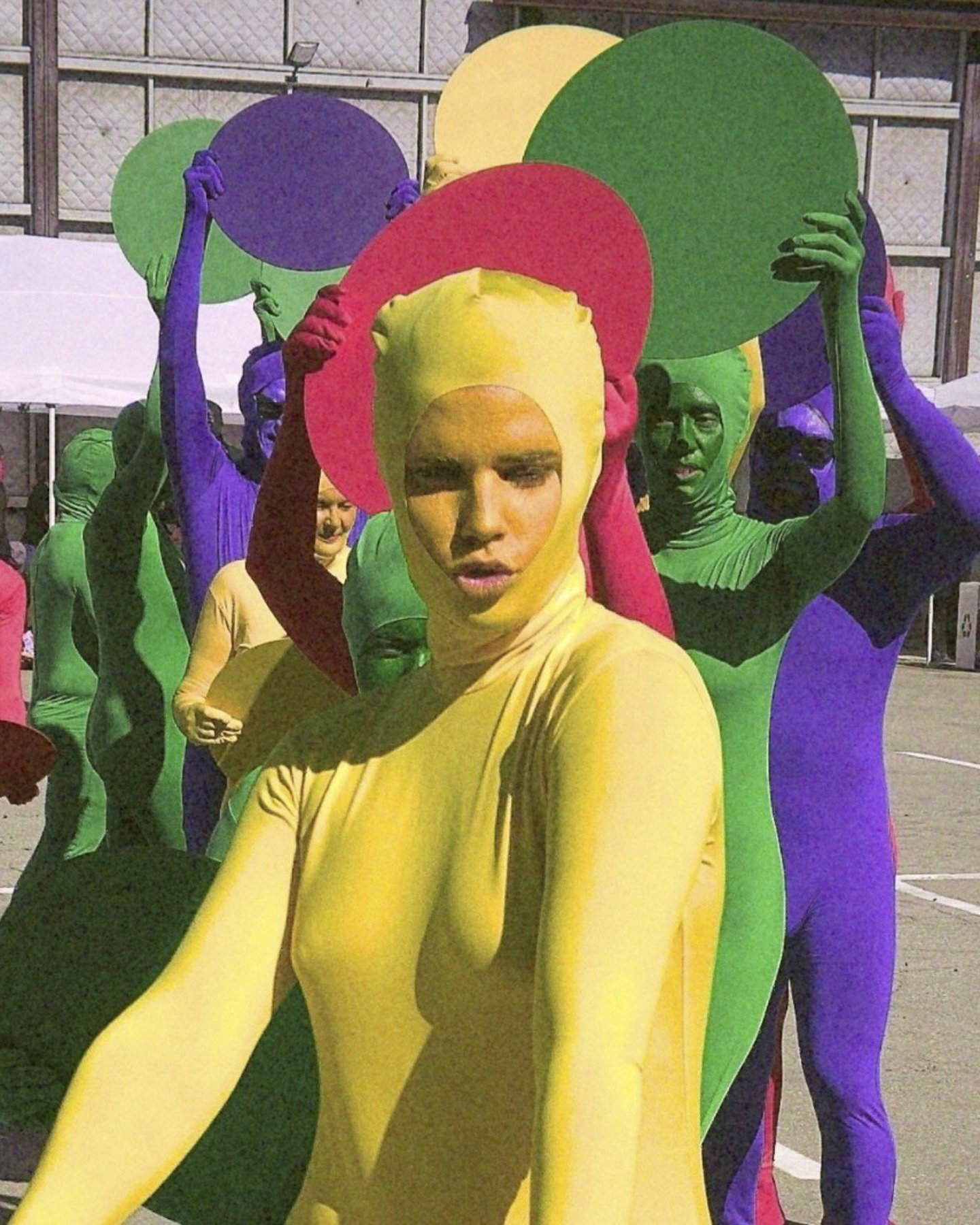
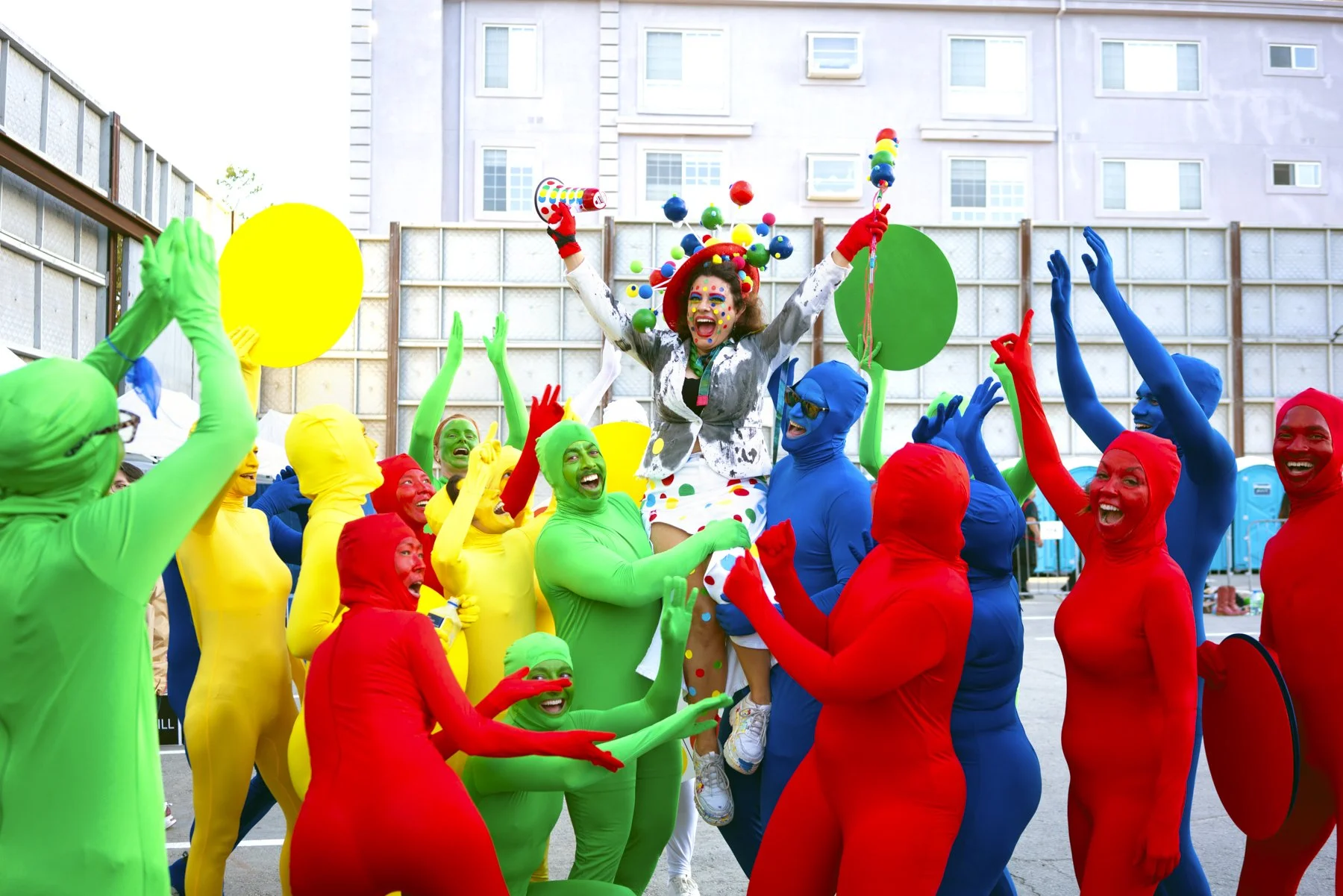
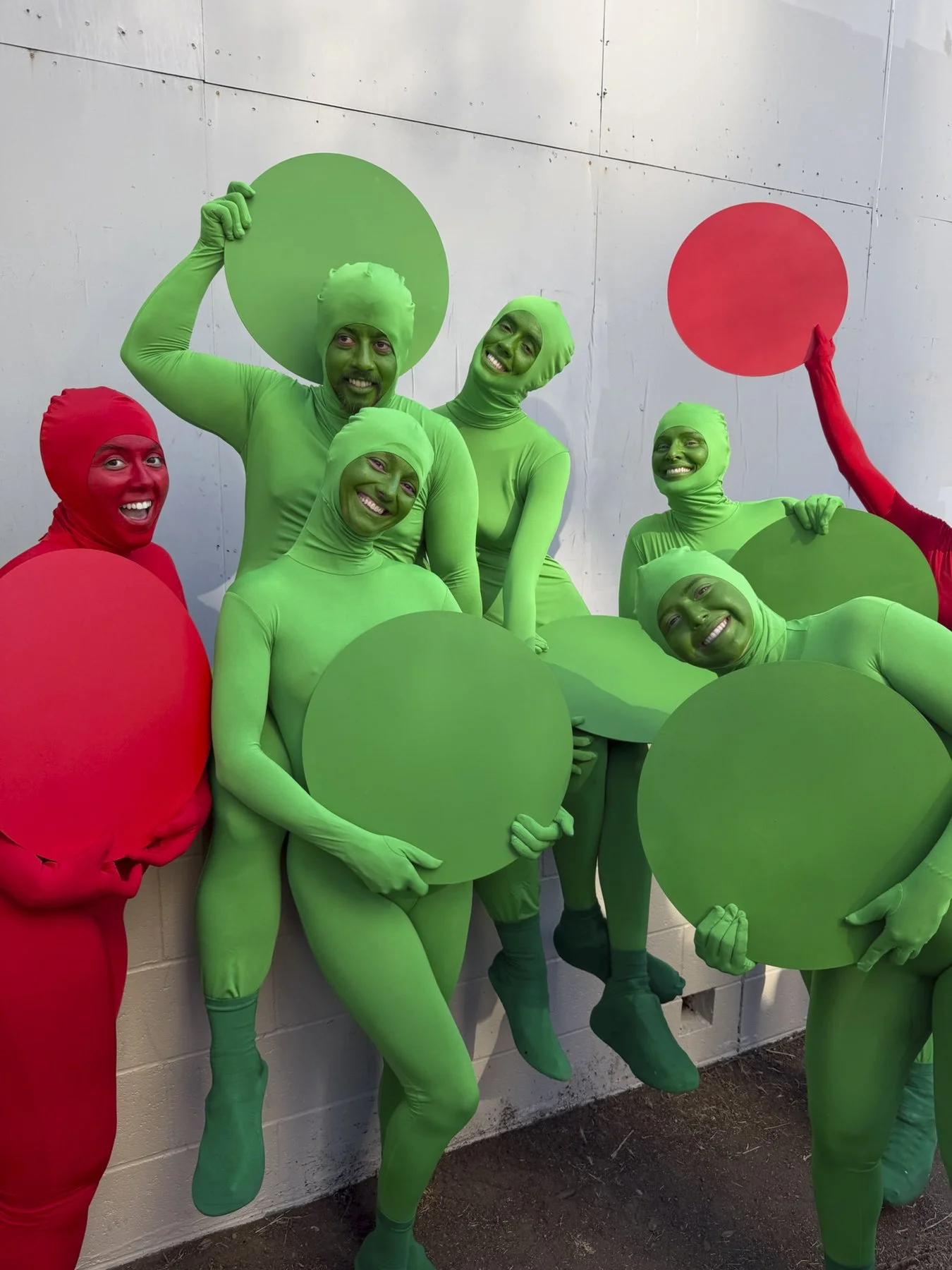
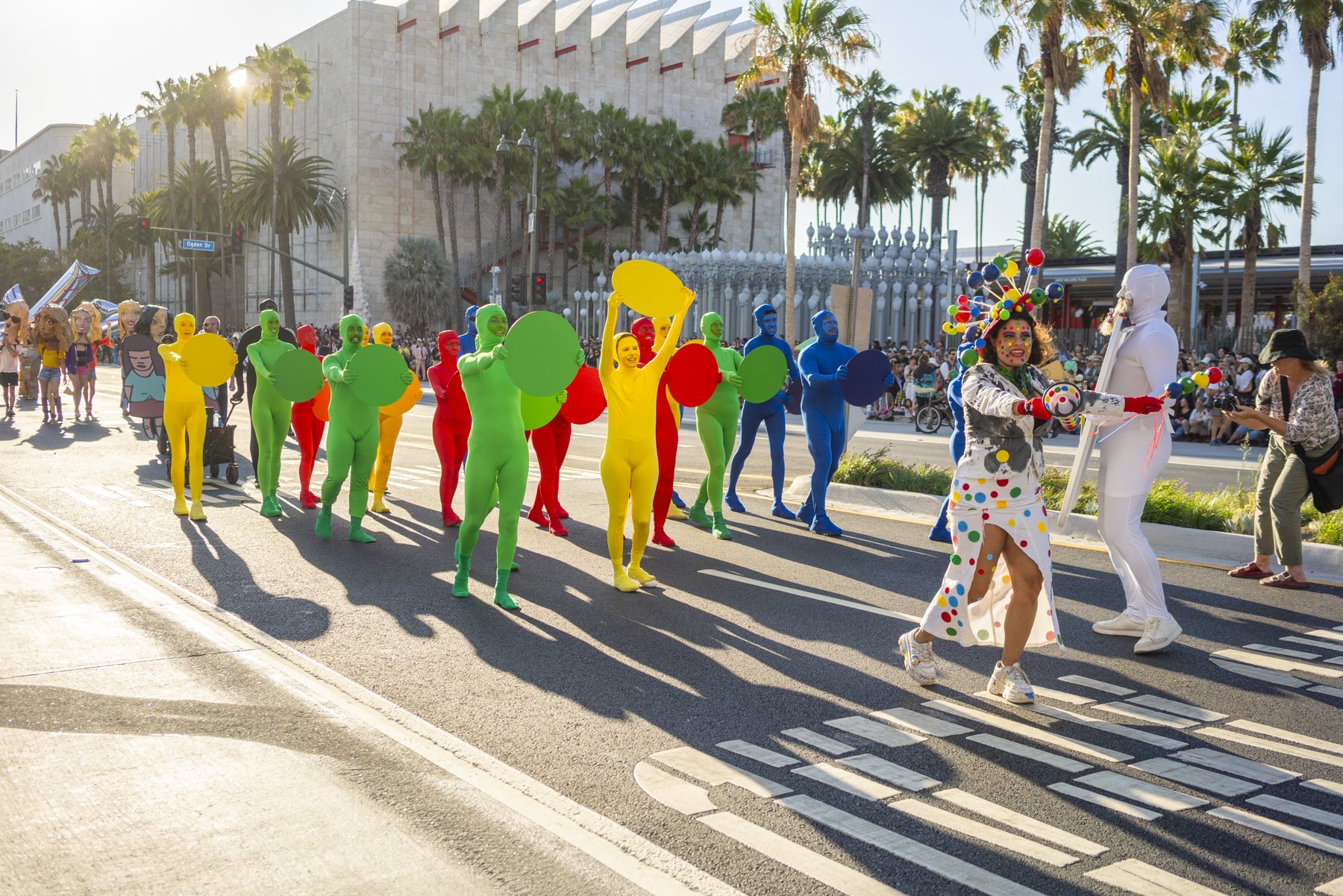
What Happened to Twister? is a moving performance inspired by one simple question: When did we stop playing?
A procession of performers dressed in saturated red, blue, yellow, and green morph suits—alongside white suits covered with Twister's iconic colored circles—moves through the streets carrying oversized colored discs. As they walk, the circles are lifted overhead, exchanged, lowered to the pavement, and transformed into a constantly shifting game board. Performers briefly assemble into recognizable Twister-inspired configurations before flowing forward again, turning the parade into a living choreography of color, movement, and connection.
An original chant echoes through the streets:
What happened to Twister?
What happened to Tag?
What happened to Hopscotch?
What got in the way?
Are we the players...
Or are we the game?
COME ON! LET'S PLAY!
At once playful and reflective, What Happened to Twister? celebrates the joy of gathering, moving, laughing, and creating together. It asks us to remember the games that once connected us—and invites us, if only for a moment, to play again.